


HERRIMAN, Utah—student enrollment figures at Herriman High school steadily approach 2,500. Some of these student faces come from SoJo (South Jordan), some from Kearns, and, if you’ll believe it, many from Herriman city—but all with their own unique passions, interests and ideas. Among these Mustang students it’s no secret that, regardless of city boundaries, one of the most formative but equally daunting challenges of high school is finding spaces where expression of identity isn’t so much of an obstacle but rather an opportunity for growth. Most agree that this is a natural process: with time and experience, relationships form and students develop stronger senses of self as they mature from sophomore to senior year. But even with all the sophomore stampedes, football games and “True Mustangs” are the efforts of Herriman High enough to support genuine community expression from the student body?
Understanding expression is a fair bit tougher than it may seem as measuring “expression” is completely relative to the field it is associated with; expression for the orchestra looks—and sounds—quite different from expression for the photography club. Despite the differences in camera shutters and violin bows, there is an underlying factor of similarity between both of these extracurriculars and that is community. Both first chair cellist and lead landscape photographer are uniform in that they make obligations to their respective communities through their involvement in their hobbies. Furthermore, in the instances of school-sponsored activity, participation also unites applicable student body members under a larger collective as representatives of their school. In doing so, student connection is not only incentivized but custom to the school’s culture, empowering students with shared spaces to reflect with one another and expand their education.
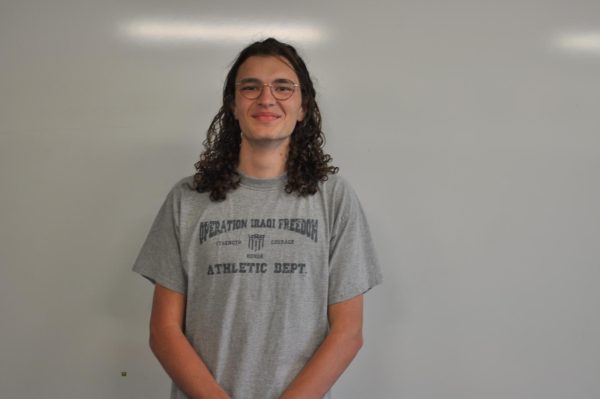
This is especially significant when examining the principles of educational theory. Theoretically, preventing the isolation of communities under a common body is fundamental in promoting interconnected environments tailored for students to feel supported in the articulation of their beliefs and values. Herriman film and literature teacher, Mr. Olson, adds on to this concept explaining that, “most high schools aren’t great at cross collaborations (…) but I think that’s something schools should be doing more of: having subjects working in tandem.”
Applying this to Herriman, we may find that individual support for the football program, for example, is necessary to facilitate student passions. However without connecting this support to the school itself a rift is created between athletics and education. We must remember that at the end of the day Herriman athletes, actors, singers, dancers, artists, musicians and creatives of every background are united in studentship; as much as they should be highlighted in their individual extracurricular accomplishments they shouldn’t have to privatize their passions. A connected student body that shows up for one another, regardless of their affiliations to certain clubs or subjects, creates a healthier environment for students to succeed.
In Utah, where the value of collective, organized power has a record of promoting tangible benefits, this is particularly true. Going back to the State’s earliest days it was the unified efforts of Latter Day Saint pioneers who established early civil arrangements, putting Utah on the map and laying the groundwork for the beehive state today. In the arts, Utah has made landmark achievements through the Sundance film festival, a world renowned institution that highlights artists—especially those in the greater Salt Lake community. Seeing the historical success, why might it feel like Herriman lacks this aspect of community within education?
Perhaps the issue is you. When asked what steps Mustangs can take to pursue community, Olson explained that Herriman High has an abundance of opportunity; adding on the insight that, “if there’s something missing, start [on] your own (…) and you can grow from that.” But when all is said and all is done, it is your responsibility as a student to make sure that Herriman’s infrastructure for community doesn’t go underutilized. You can lead a Mustang to water but you can’t make them drink. Take the initiative to put your ideas on the table for conversation, be the first person to volunteer and, wherever you can, remember to show up: for yourself and those around you! It may feel overwhelming but the good news is that it gets easier and there are so many people rooting for you.